
Early pregnancy can begin far earlier than your missed period, and your body often sends gentle signals that something new is happening.
This guide explained how hormonal changes—hCG, estrogen, and progesterone—create symptoms like fatigue, nausea, breast tenderness, bloating, white discharge, and frequent urination. We also covered week-by-week changes, hidden symptoms, discharge and urine differences, PMS confusion, and early implantation signs.
While these early indicators offer valuable insights, every woman’s experience is different. Listen to your body, track symptoms, and take a pregnancy test for accurate confirmation. Seek medical advice if you notice anything abnormal.
What Are the Very Early Signs of Pregnancy Before a Missed Period?
The earliest signs of pregnancy before a missed period include implantation spotting, breast tenderness, fatigue, mild cramps, bloating, nausea, increased sense of smell, frequent urination, and creamy white discharge. These early symptoms occur due to hormonal changes such as rising hCG, progesterone, and estrogen.
Pregnancy symptoms can start 6–10 days after conception, even before your expected period date. These small changes are often mistaken for PMS, which is why understanding them deeply is crucial.
Why Symptoms Begin Before Your Missed Period
Many women are surprised to notice pregnancy symptoms even before their period is due, but there’s a scientific reason behind it. As soon as the sperm fertilizes the egg and implantation begins, your body switches into “pregnancy mode.” This triggers a chain of hormonal and physiological changes that create the early symptoms you feel.
Let’s break down exactly what happens inside your body — in simple, human language.
1. hCG (The Pregnancy Hormone) Rises After Implantation
Once the fertilized egg implants into the uterine lining (usually 6–10 days after conception), your body starts producing human chorionic gonadotropin (hCG).
This hormone signals the body to:
- Stop your menstrual cycle
- Support the developing embryo
- Increase blood flow to the uterus
- Maintain progesterone and estrogen levels
Even though hCG starts low, it doubles every 48–72 hours, which is why early signs start appearing just days after implantation.
How it affects you:
- Mild nausea
- Slight dizziness
- Frequent urination
- Breast sensitivity
- Extreme tiredness
Your pregnancy test may still show negative, but your body has already started reacting.
2. Progesterone Increases — Affecting Mood, Discharge, and Digestion
Progesterone is one of the most powerful hormones in early pregnancy. After implantation, your body increases progesterone levels dramatically.
Why this matters:
Progesterone relaxes muscles—including the uterus—to help support early pregnancy. But that relaxation also affects other systems in your body.
Effects of rising progesterone:
- Mood swings You may feel emotional, irritated, or suddenly happy and sad, even before a missed period.
- Increased discharge A creamy or milky white discharge is common. Progesterone thickens cervical mucus to protect the uterus.
- Bloating and indigestion Progesterone slows digestion, which leads to gas, bloating, burping, and slight stomach discomfort.
- Fatigue This hormone signals your body to conserve energy, making you feel unusually tired early on.
Progesterone is also responsible for the “I feel like my period is coming” sensation — even if you’re actually pregnant.
3. Estrogen Rises — Triggering Breast Changes & Nausea
Estrogen works closely with progesterone, and it also rises rapidly after implantation.
What estrogen does in early pregnancy:
- Helps the uterus grow
- Increases blood flow to the breasts
- Prepares milk ducts for breastfeeding
- Enhances smell sensitivity
Real-life symptoms you may notice:
- Sore, swollen, or tingly breasts
- Darkening nipples
- Nausea (morning sickness or all-day nausea)
- Strong reaction to smells (perfume, soap, food)
Even a small increase in estrogen can make scents feel overpowering or trigger nausea.
4. Increased Blood Flow — Affecting Urination, Temperature & Physical Feelings
By the time implantation happens, your body immediately starts increasing blood flow to support the embryo.
This increased blood flow causes:
- More frequent urination: Your kidneys work harder, and the bladder becomes more sensitive — even before hCG is high enough for a positive test.
- Feeling warmer or experiencing mild hot flashes: Blood circulation rises, increasing your core temperature slightly.
- Breast heaviness or tenderness: More blood rushes into the breast tissue, making them feel fuller, heavier, or more sensitive.
- Light headaches or dizziness: More blood going to the uterus can momentarily reduce blood available in other areas.
These changes often begin quietly, which is why many women notice symptoms before they even realize they could be pregnant.

Putting It All Together: The Body’s Early Pregnancy Reaction
When these hormones rise together (hCG, progesterone, estrogen), the body reacts quickly. The combined effect leads to the cluster of early symptoms many women feel:
- Sudden fatigue
- Mild cramps
- White discharge
- Heightened smell
- Breast soreness
- Emotional shifts
- More bathroom visits
Even before your period is late, your body is already gearing up to support a new life.
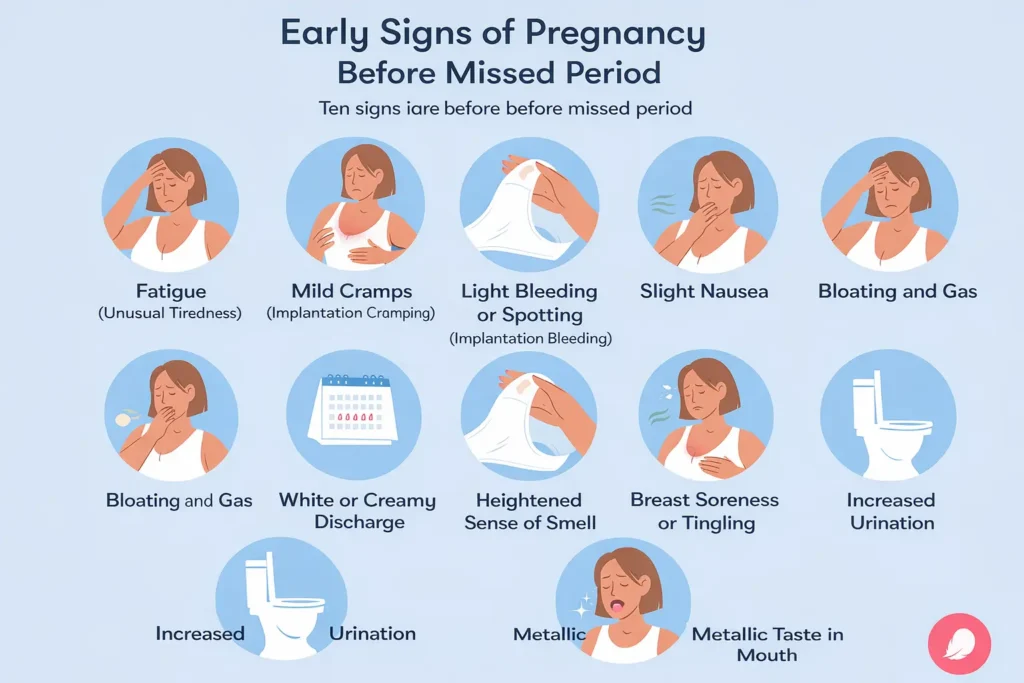
10 Early Signs of Pregnancy (Medically Recognized Indicators)
Early pregnancy triggers a chain of hormonal changes—mainly hCG, progesterone, and estrogen—which create noticeable physical and emotional symptoms even before you miss your period. Below are the most common early indicators, explained in simple language so you know exactly what each sign means.
1. Fatigue (Unusual Tiredness)
One of the very first symptoms, fatigue happens because progesterone levels rise quickly after conception. This hormone naturally makes you feel sleepy, low-energy, and unable to focus. Your body is also working overtime to support the fertilized egg, which increases energy demand.
2. Mild Cramps (Implantation Cramping)
Light pulling, twinges, or mild cramps in the lower belly can occur 6–10 days after ovulation. This happens when the fertilized egg attaches itself to the uterine lining. These cramps are lighter than menstrual cramps and don’t last long.
3. Light Bleeding or Spotting (Implantation Bleeding)
Around 15–25% of women experience very light spotting—pink or brown—in early pregnancy. It usually lasts a few hours to 2 days. This is a normal effect of implantation and is much lighter than a period.
4. Slight Nausea
Morning sickness can start early because increasing hCG and estrogen make your stomach more sensitive. You may feel a light wave of nausea or food aversion, especially to strong smells.
5. Bloating and Gas
Progesterone slows your digestion to protect early pregnancy, which can cause bloating, burping, or gassiness. Many women confuse this with PMS.
6. White or Creamy Discharge
A rise in progesterone can increase milky white (leukorrhea) discharge. This is usually harmless and indicates that the cervix is preparing to protect the uterus.
7. Heightened Sense of Smell
Many women report noticing perfume, food, or room odors more intensely. This is linked to rising estrogen.
8. Breast Soreness or Tingling
Hormones increase blood flow to the breasts, making them feel heavier, tender, or tingly—similar to PMS but slightly more intense.
9. Increased Urination
More blood flow + early hCG rise causes the kidneys to filter more fluid, leading to frequent urination even before a missed period.
10. Metallic Taste in Mouth
Called dysgeusia, this metallic taste happens due to sudden hormonal shifts. It may come and go throughout the day.
Early Pregnancy Symptoms You May Also Notice
Early pregnancy may also cause subtle physical changes that feel unusual, mild, or easy to overlook but are linked to early hormonal shifts.
- Constipation
- Increased sensitivity to smells
- Heartburn or acid reflux
- Nasal congestion
- Increased heart rate or palpitations
Early Signs of Pregnancy 1 Week After Conception
One week after conception, most symptoms are mild. Women may experience slight cramping, fatigue, increased body warmth, and more cervical mucus. These happen due to early cell division and hormonal changes, though many women may feel nothing noticeable this early.
What’s Happening in Week 1
Right after fertilization:
- The sperm meets the egg → zygote forms
- The cell divides rapidly → blastocyst
- It travels through the fallopian tube toward the uterus
- No implantation yet (usually happens day 6–10)
Possible Symptoms at Week 1
- Feeling unusually tired
- Moisture in underwear (cervical mucus increase)
- Elevated basal body temperature
- Mild belly heaviness
- Mood changes
However, many women will have no symptoms at all at this stage.

Very Early Signs of Pregnancy 2 Weeks After Conception
Two weeks after conception, stronger early pregnancy symptoms appear, such as nausea, breast tenderness, bloating, and a heightened sense of smell. These occur because implantation is complete and hormonal changes sharply increase.
What Happens in Week 2
- Implantation is completed
- hCG levels start doubling every 48–72 hours
- The placenta begins forming
- Hormones hit their first major surge
Common Week 2 Symptoms
- Food aversions
- Nausea
- Emotional sensitivity
- Bloating
- Cramps resembling period cramps
- Thick white discharge
First 72 Hours of Pregnancy Symptoms (3 Days Pregnant)
During the first 72 hours after conception, symptoms are usually too subtle to notice. Biological changes like fertilization, cell division, and early hormone release occur internally, but noticeable pregnancy symptoms typically appear later, around implantation time.
What Happens in the First 3 Days
Inside your body:
- The zygote begins dividing
- It travels toward the uterus
- No implantation yet
- No hCG is released yet
Symptoms at this stage are either extremely mild or nonexistent.
Possible minimal symptoms:
- Slight warmth
- Mild pelvic pressure
- Increased cervical mucus
These symptoms are not reliable indicators of pregnancy yet.
Early Pregnancy Discharge Before Missed Period
Early pregnancy discharge is typically creamy, milky white, or sticky due to increased progesterone. It is one of the earliest signs because the body increases cervical mucus to protect the uterus and support implantation.
Types of Discharge in Early Pregnancy
| Type | What It Means |
| Creamy white | Normal early pregnancy discharge |
| Sticky | Hormonal changes; common in early pregnancy |
| Watery | Increased estrogen |
| Thick white | Common; not itchy |
Discharge That Could Indicate Infection
Seek medical attention if discharge is:
- Green or yellow
- Foul-smelling
- Accompanied by itching
Early Signs of Pregnancy in Urine (Before Test)
Before taking a pregnancy test, early urine changes include stronger smell, darker concentration, and frequent urination. These changes are caused by rising progesterone and increased blood flow to the kidneys.
Urine Changes You Might Notice
- Frequent urination even before missed period
- Slight smell changes due to hormones
- Mild dehydration feeling
- Night-time urination
A pregnancy test may still be negative because hCG levels may be too low to detect.
Positive Signs of Pregnancy (Scientifically Verified)
Scientifically verified early pregnancy signs include implantation bleeding, rising basal body temperature, breast soreness, fatigue, and elevated hCG levels. These align strongly with early pregnancy hormonal patterns.
Most Reliable Early Pregnancy Indicators
- A sustained high basal body temperature (above 98°F)
- Implantation spotting (light pink/brown drops)
- Heightened smell sensitivity
- Sudden fatigue
- Creamy discharge
Hidden Pregnancy Signs That Many Women Miss
Hidden early pregnancy signs include nosebleeds, vivid dreams, excessive thirst, mild dizziness, gum sensitivity, and mood fluctuations. These subtle symptoms often appear before more classic signs.
Lesser-Known Early Pregnancy Symptoms
- Nasal congestion (due to increased blood flow)
- Sensitive or bleeding gums
- Dry mouth
- Metallic taste in mouth
- Sudden aversion to usual foods
- Feeling unusually emotional
These symptoms occur because of increased blood flow, progesterone changes, and early hormonal reactions.
Pregnancy Symptoms vs PMS: How to Tell the Difference
Pregnancy symptoms often include creamy discharge, heightened smell, ongoing fatigue, and continued symptoms past the expected period date. PMS symptoms typically reduce once the period begins.
Pregnancy vs PMS Comparison Table
| Symptom | Pregnancy | PMS |
| Cramps | Light, lasts longer | Strong but short |
| Discharge | Creamy white | Minimal |
| Fatigue | Continuous | Ends after period starts |
| Breast tenderness | More intense | Mild to moderate |
| Spotting | Light implantation bleeding | Rare |
| Smell sensitivity | High | Usually normal |
Real Women Share: “How I Knew I Was Pregnant Before My Missed Period”
Many women report early signs such as:
- Feeling “different” or unusually tired
- Sudden dislike of favorite foods
- Emotional sensitivity
- Tender breasts days before an expected period
These real experiences support scientific patterns of early hormonal changes.
When Should You Take a Pregnancy Test?
Take a pregnancy test 10–14 days after intercourse or on the first day of a missed period for most accurate results. Testing too early can lead to false negatives.
Best Testing Timeline
- Early detection test: 4–5 days before missed period
- Normal test: On the day of missed period
- Most accurate: 1 week after missed period
When to See a Doctor (Warning Signs)
See a doctor immediately if you experience severe abdominal pain, heavy bleeding, dizziness, fainting, or shoulder pain. These signs may indicate ectopic pregnancy, early miscarriage, or other complications that require urgent medical attention.
Heavy Bleeding That Feels “Not Normal”
Light spotting can be normal, but soaking a pad within an hour, passing bright red blood, or bleeding that feels heavier than your regular period is a red flag. Many women describe it as “my body felt off,” or “this wasn’t my usual period flow.”
Severe One-Sided Pelvic Pain
Sharp pain on one side of the abdomen can indicate ectopic pregnancy, especially if it worsens with movement. Some women say it feels like a “stabbing pain” rather than cramping.
Passing Large Clots or Tissue
Passing large clots or grayish tissue may signal early pregnancy loss. It’s important to monitor clot size and frequency.
Cramps That Intensify Instead of Easing
Normal pregnancy cramps are mild. But intense cramps that make you stop walking, bend forward, or take deep breaths should be evaluated immediately.
Additional Clinical Insights Often Overlooked in Early Pregnancy Guides
1. Hormonal Timeline (Day 1–28) – When Each Symptom Actually Begins
Hormonal shifts begin long before a missed period. In the first week after conception, estrogen and progesterone slowly rise. Around day 6–10, implantation triggers the first release of hCG, leading to early symptoms like breast tenderness, fatigue, and mild nausea. By day 21–28, hCG levels start doubling every 48–72 hours, intensifying symptoms such as a heightened sense of smell, bloating, or increased discharge. Most blogs skip this timeline, but it helps women understand why symptoms appear at specific moments.
2. Discharge & Urine Symptom Matrix (What’s Normal vs. Not)
Early pregnancy discharge is typically creamy white or sticky due to progesterone. Urine may appear darker or stronger-smelling because of hormonal changes and increased kidney filtration. Many women panic about these changes, but they’re often normal unless accompanied by odor, greenish color, itching, or pain—signs of infection requiring medical attention.
3. Indian/Asian Body-Type Variations
Women in Asian regions, due to diet patterns (higher carbs, spices) and smaller average body frames, may experience bloating, nausea, or temperature sensitivity more intensely. Iron levels may also influence fatigue symptoms.
4. Stress-Induced False Pregnancy Symptoms
Stress can mimic pregnancy signs—fatigue, nausea, headaches, delayed periods—due to cortisol fluctuations. Understanding this reduces worry and avoids false assumptions.
5. Rare Early Signs: Vivid Dreams, Nosebleeds, Gum Sensitivity
Increased blood flow and hormonal shifts may trigger vivid dreams, mild nosebleeds, or gum sensitivity—symptoms many women report but few medical sites mention.
Final Thoughts
Early signs of pregnancy before a missed period can be subtle, confusing, and surprisingly easy to overlook. From hormonal shifts to physical sensations, the body begins preparing for pregnancy much earlier than most women expect. Understanding these early symptoms—cramping, fatigue, discharge, breast tenderness, and heightened smell—helps you recognize changes with more clarity. While every woman’s body is different, these early clues often provide the first quiet signs of new life.
Frequently Asked Questions (People Also Ask) on Early Signs of Pregnancy Before Missed Period
1. What was your first symptom of pregnancy before missed period?
Many women report subtle early signs like fatigue, breast heaviness, increased creamy discharge, or emotional shifts. These small changes often appear 7–10 days after conception and feel slightly “different” from typical PMS symptoms.
2. What are common early pregnancy symptoms that people often overlook?
Many early signs go unnoticed such as vivid dreams, bleeding gums, metallic taste, stronger smells, nasal congestion, night-time nausea, and sudden food aversions. These symptoms are rarely discussed but happen due to fast hormonal changes in early pregnancy.
3. How did you “know” you were pregnant before missing your period?
Some women simply feel “different.” They describe unusual tiredness, strong emotions, changes in appetite, or a heavy feeling in the lower belly. Early instinct combined with subtle physical signs leads many to suspect pregnancy before the missed period.
4. Can you feel pregnant after 3 days?
Biologically, noticeable symptoms are unlikely within 72 hours because implantation hasn’t happened yet. However, some women feel bloating, warmth, or slight pressure from ovulation changes — not true pregnancy signs. Real pregnancy symptoms usually appear after implantation (day 6–10).
5. Does white discharge mean early pregnancy?
Yes. Thick, creamy, milky white discharge (leukorrhea) is common due to increased progesterone. This discharge protects the uterus and supports implantation. As long as there’s no itching or strong odor, it’s a normal early pregnancy sign.
6. Can you feel like your period is coming and still be pregnant?
Absolutely. Implantation cramps feel very similar to PMS. Many women think their period is about to start, but instead, the cramps continue mildly without bleeding. This is one of the most confusing early pregnancy experiences.
7. What does pregnancy feel like during the first few weeks?
Early pregnancy often feels like PMS but slightly exaggerated. There may be bloating, fatigue, food aversions, breast tenderness, and heightened smell sensitivity. Some women feel emotional or unusually warm at night. Others feel no symptoms at all — both are normal.
8. Pregnancy symptoms – Do we generally have any kind of signs before a missed period?
Yes. Many women experience early signs before the missed period including fatigue, bloating, light spotting, breast soreness, frequent urination, and creamy discharge. These symptoms begin once implantation happens and hormones start rising.
